Height at the shoulder
36–41cm, the desirable height
Dogs weigh 13 to 17 kg and bitches 11 to 15.4 kg in the KUSA standard: a lot of dog in a small frame.[1]
The breed standard
A compact, powerful terrier that usually adores its own people and often wants nothing to do with strange dogs. This is what life with a Staffy looks like in South Africa.
Is a Staffy right for you?
A Staffy stands well below knee height but is built like a weightlifter. Lead manners and a well-fitted harness matter from the very first week.
Training and exercise
L-2-HGA, a brain disease diagnosed in South Africa, and hereditary cataract can both be kept out of a litter by testing the parents. Here is what to ask for.
Health and screening
Three names people often mix up. The Staffordshire Bull Terrier is a KUSA breed with a standard of its own, and here is what that means.
Know the difference
What to ask a breeder, which papers should come with the puppy, and the colour and size claims that should make you walk away.
Finding a puppyThe short answers come first. Each figure is taken from the breed standard, KUSA, a breed authority or a published study, all listed at the foot of the page. Every dog is an individual.
A Staffy is a small dog with a big heart and a strong body. Go through both lists with everyone who will share a home with the dog, and answer them honestly before you look at a single puppy.
Whatever the breed, six checks protect a South African family before any money changes hands: meet the puppy with its mother, read the records, have the terms in writing, and pay a business account only.
Read the six checks
The KUSA standard calls the breed bold, fearless and very affectionate, and highly intelligent. VCA describes a loving dog that is devoted to its family but headstrong, and usually friendly with visitors once its people are relaxed.
Its fighting past is history, not its job: today the breed is bred as a companion. Breed explains only part of any one dog's behaviour, though. Genes, early life and training all shape the adult, and every dog needs supervising around children.[1][5][3]

VCA says a well-bred, well-socialised Staffy will not start a fight but will not back down if challenged, and that the breed is least keen on unfamiliar dogs. That makes off-lead meetings with strange dogs the situation to avoid, and dog parks a poor idea.
Many Staffies live happily with a dog they grew up with. Introduce any new dog slowly, on a lead and under supervision, and give cats and small pets the same patience.[5]
Living with other dogs
Hereditary cataract in Staffies is caused by a change in one gene, HSF4, and a DNA test has existed since 2006. After UK breeders took up the test, the gene's frequency among tested Staffies fell by about 86%.
L-2-HGA, an inherited brain disease, has a DNA test too, and it has been diagnosed here: South Africa's first case was published in 2014. Both conditions are recessive, so testing both parents keeps affected puppies from being born.[7][6][3]
Staffy healthSix pages for South African families weighing up a Staffy, with the sources for each page at its foot.
The two DNA tests to ask for, what clear, carrier and affected mean, eye examinations, and the other conditions vets see in the breed.
Staffy health checksDaily life, other dogs and dog parks, kind training for a strong dog, grooming, feeding and South African conditions.
Living with a Staffy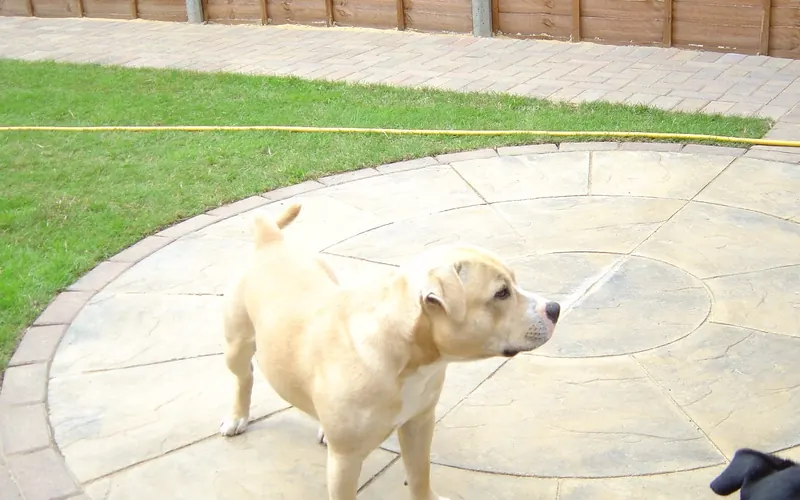
What to budget for each month and each year, and the choices that push the total up or keep it down.
The cost to keep oneWhat to ask a Staffy breeder, the papers to expect, the colour and size claims to question, and how Premier Pets places a puppy.
Buy a puppy safely
From the Black Country to KUSA's top three: the standard, the colours it accepts, the AmStaff question and the Staffy clubs here.
Clubs and registriesPremier Pets places puppies; it does not breed them. Read how a placement works, then ask about a Staffy.
How we place puppies
Dogs weigh 13 to 17 kg and bitches 11 to 15.4 kg in the KUSA standard: a lot of dog in a small frame.[1]
The breed standardNever lower than sixth in KUSA's ten-year history; 1,001 were registered in 2016.[8]
History and clubsHow far the HSF4 cataract gene's frequency dropped among tested UK Staffies once breeders adopted the test.[7]
Ask for the resultsFrom the KUSA breed standard, KUSA's 2025 registry statistics and a UK study of DNA-test results. Dogs differ from one another; the sources are listed at the foot of the page.
Breeders, vets, trainers, groomers and boarding kennels across South Africa are listed in the Premier Pets Directory. Being listed is not a recommendation, so put the questions in this guide to anyone you contact.
Five starting points, each opening a section of this guide.
What the signs look like, the South African case from 2014, and why both parents need the test.
Introductions on a lead, why dog parks are a poor idea, and homes with two dogs.
Two KUSA breeds with standards of their own, and a type KUSA does not register.
Why no colour makes a dog healthier, and why oversized or undersized 'Staffies' are not the breed.

The breed is well known for loving its family's children, but a strong, boisterous Staffy can knock a small child over in play. Never leave any dog alone with a child, and teach children to leave a resting or eating dog in peace.[1][5]
Often not with dogs they do not know. Many live well with a dog they grew up with; introduce any new dog slowly and on a lead.[5]
No. The Staffordshire Bull Terrier is a separate breed with its own KUSA standard. The 'pit bull' is a type, not a breed that KUSA registers.[1][8]
About 11 to 14 years. UK vet records gave Staffies a life expectancy at birth of 11.3 years, about the same as dogs overall.[4][3][5]
Yes. The short, smooth coat sheds lightly all year and more in season; a weekly brush keeps it under control.[5][3]
Daily walks plus running, tug, retrieve and puzzle games. The Royal Kennel Club lists up to an hour a day, and a bored Staffy chews.[3][5]
DNA tests for L-2-HGA and hereditary cataract, and an eye examination by a veterinary ophthalmologist. Hip and elbow x-rays are better still.[3][6][7][9]
Blue is a colour the standard accepts, not a rarer or healthier one. A higher price for a 'rare colour' is a warning sign.[1][10]
Yes, if it gets enough exercise and your body corporate allows it. The Royal Kennel Club rates the breed for a small house and garden.[3]
Not really. Most are friendly with people once their owner accepts them. A Staffy is a companion; do not buy one to guard your home.[5]
Yes. At Onderstepoort, Staffies were diagnosed with babesiosis less often than Labradors, but 16 of the 282 seen still had it. Use tick control all year.[11]
Both breeds come from the same 19th-century crosses of bulldogs and terriers. One line was refined into the white Bull Terrier, while the Staffy kept the original type.[3]
Food, tick, flea and worm control, tough toys and chews, and insurance or a vet fund every month, with vaccinations, sterilisation and training classes on top. We found no dated South African figure to quote, and KUSA warns that a cheap puppy can cost more later.[10]
It is worth asking your local SPCA which dogs it has and how it matches them with families. An adult dog's manners with other dogs are already known, which helps with this breed.
Begin with the breeders in the Premier Pets Directory, or search it for Staffies, and put the questions in this guide to every breeder you contact.
Businesses in the directory come from public sources, and each can claim, correct or remove its own listing. Being listed is not a recommendation: Premier Pets has checked no breeder unless its page says so.
Written from the sources above for Premier Pets. Last reviewed 27 November 2026. Spot something out of date? Email sales@premierpets.co.za.